

SuDS & Water Reuse
Making better use of rainwater all year round
Rainwater is a valuable resource, but during periods of heavy rainfall it can also place pressure on
drainage systems.
Traditionally, rain falling onto a roof is collected by gutters and sent through downpipes towards the
drainage system as quickly as possible.
SuDS - Sustainable Drainage Systems - take a different approach. They aim to manage rainfall closer
to where it falls by slowing, storing, reusing and controlling the rate at which water is released back into
the drainage system.
Why SuDS Garden Planters Matter
A SuDS garden planter can receive rainwater directly from a building's downpipe and temporarily hold it
within a planted area.
The plants, soil and drainage layers help slow the movement of water, while the planter provides
temporary storage and attenuation. Rather than infiltrating into the ground, the stored rainwater is
released gradually back into the main rainwater downpipe and onward to the drainage system.
A single planter will not solve flooding on its own. But when rainwater is managed at source across
many homes, schools, workplaces and developments, these smaller measures can become part of a
much wider approach to reducing peak runoff and pressure on drainage systems during rainfall.
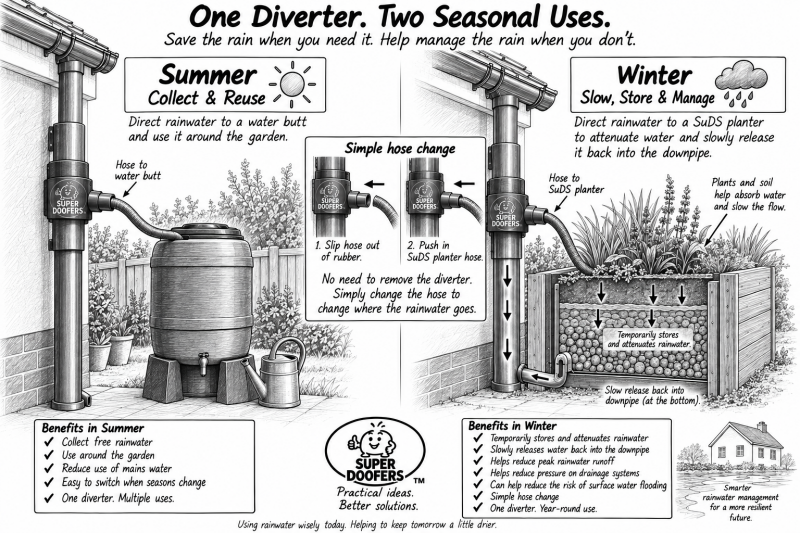
One Diverter. Two Seasonal Uses.
Your rainwater needs can change throughout the year - so why shouldn't your diverter change with
them?
Spring & Summer - Collect & Reuse
During the warmer and drier months, connect your Super Doofers rainwater diverter to a water butt.
Rain falling on your roof can be collected and stored for later use around the garden, reducing the need
to use treated mains water for jobs that rainwater can do.
Autumn & Winter - Slow, Store & Manage
As we move into the wetter months, water butts can remain full and storing additional rainwater may
become less useful.
That's when the same Super Doofers diverter can take on a different role.
Simply pull the water-butt hose from the diverter's rubber connection and push in the hose leading to a
suitable SuDS garden planter.
NO NEED TO REPLACE THE DIVERTER. NO COMPLICATED ALTERATIONS. SIMPLY CHANGE THE HOSE TO CHANGE WHERE THE WATER GOES
Save the rain when you need it. Help manage the rain when you don't
During wetter periods, the aim changes from simply collecting rainwater to managing how quickly it
reaches the drainage system.
Diverting a proportion of roof runoff towards a properly designed SuDS planter allows that water to be
temporarily stored and attenuated instead of sending it immediately into the drainage system.
The stored water is then slowly released from the bottom of the planter back into the main rainwater
downpipe. This delays the flow, helping reduce peak runoff and pressure on the drainage system during
periods of rainfall.
Small Changes. Bigger Picture.
Imagine rainwater being managed this way across many homes, streets, schools and businesses.
One property may only manage a relatively small roof area. But thousands of individual measures
working closer to where rain falls can contribute to a broader approach to managing surface water.
Rain gardens, SuDS planters, water butts, permeable surfaces, swales and other sustainable drainage
measures can all have a role.
Don't treat every drop of rain as waste that needs to be removed immediately.
Where practical, reuse it, slow it, store it and control how quickly it reaches the drainage system.
A Practical Approach from Super Doofers
At Super Doofers, we're developing practical products that make rainwater management easier for
ordinary homes and buildings across the UK.
Our rainwater diverters can already be used for water collection and can also provide a simple way of
directing roof water towards suitable SuDS planters for temporary storage and attenuation before a
controlled release back into the rainwater downpipe.
We're also continuing to explore new approaches to rainwater management, water conservation and
sustainable drainage.
One diverter. Year-round use.
Summer: collect it.
Winter: slow, store and manage it.
All year: make better use of the rain that falls on your roof.